I am a software engineer and founder based in Manila.
I design and build AI products, geospatial data platforms, and occasionally,
games. I work across product, engineering, and applied AI. Current work includes
Transcendiant Labs,
CramIt,
Ace Signal,
and
PlanetCracker.
I love science fiction, Minecraft, Ace Combat, space exploration, and fighter jets. On the side I do writing, drawing, and 3D modeling. Recent recognition: Bronze Award at the Startup QC Student Competition (2026), PH100 2026, 3rd place at the Casper Build Day AI Hackathon (2026), and Best Position Paper at Poveda Model United Nations (2025).
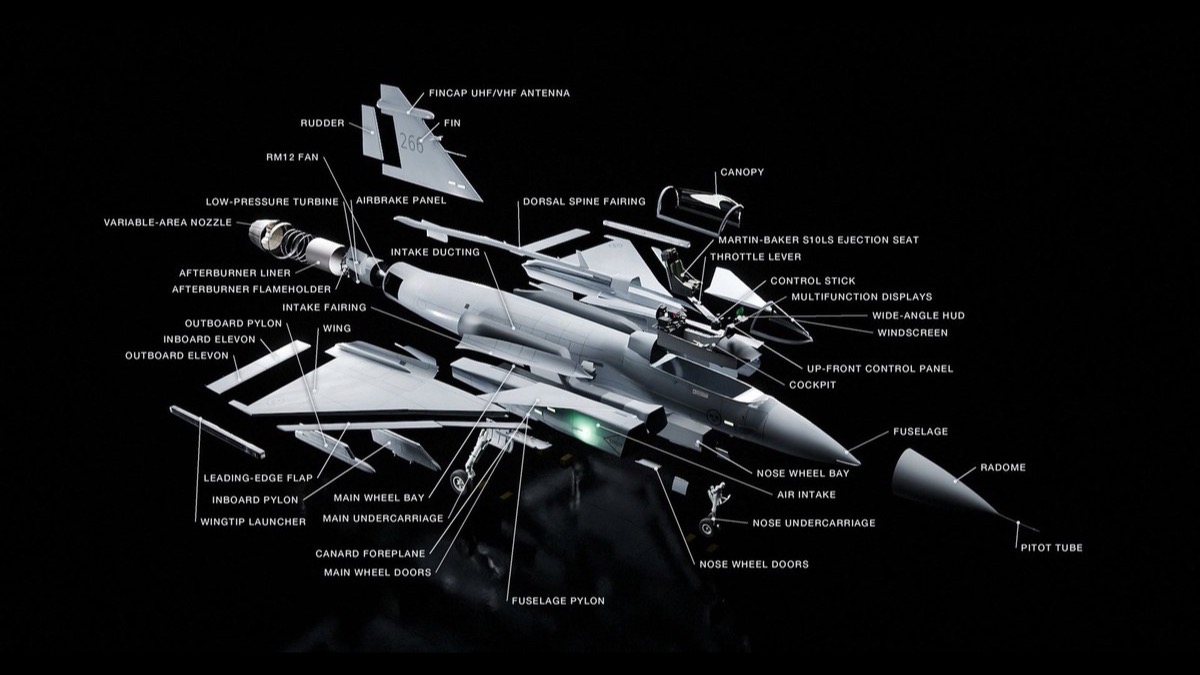
Founded in 2026, my current company. Transcendiant Labs makes photoreal 3D visuals, exploded-view and cross-section diagrams, environments, simulations and interactive web pages for manufacturers, engineering firms, advertising agencies and media. The site's showcase is a labeled exploded view of a Saab JAS 39 Gripen C, built in Blender as an independent project (not affiliated with Saab). EARTHSHINE-1, MARCHER and TranscendiantRouter are also Transcendiant Labs projects.
Founded an AI study platform that turns notes, slides, and documents into quizzes, mock exams, and study notes. Started in November 2023 on OpenAI's text-davinci-003, a completion model that predated the chat-based LLMs everyone uses now. The model couldn't handle long documents, so I independently figured out a way to split content into chunks and process them individually, which turned out to be the same technique the industry later standardized as chunking. Over time I taught myself Firebase for authentication, Stripe for billing infrastructure, Railway for deployment, and Google Analytics for tracking. I also implemented PDF downloads, rate limiting, bot prevention, and SEO from scratch. Every major technical skill I use today traces back to something I had to figure out for CramIt. Currently freemium with 2,200+ learners served and 35+ daily active users.
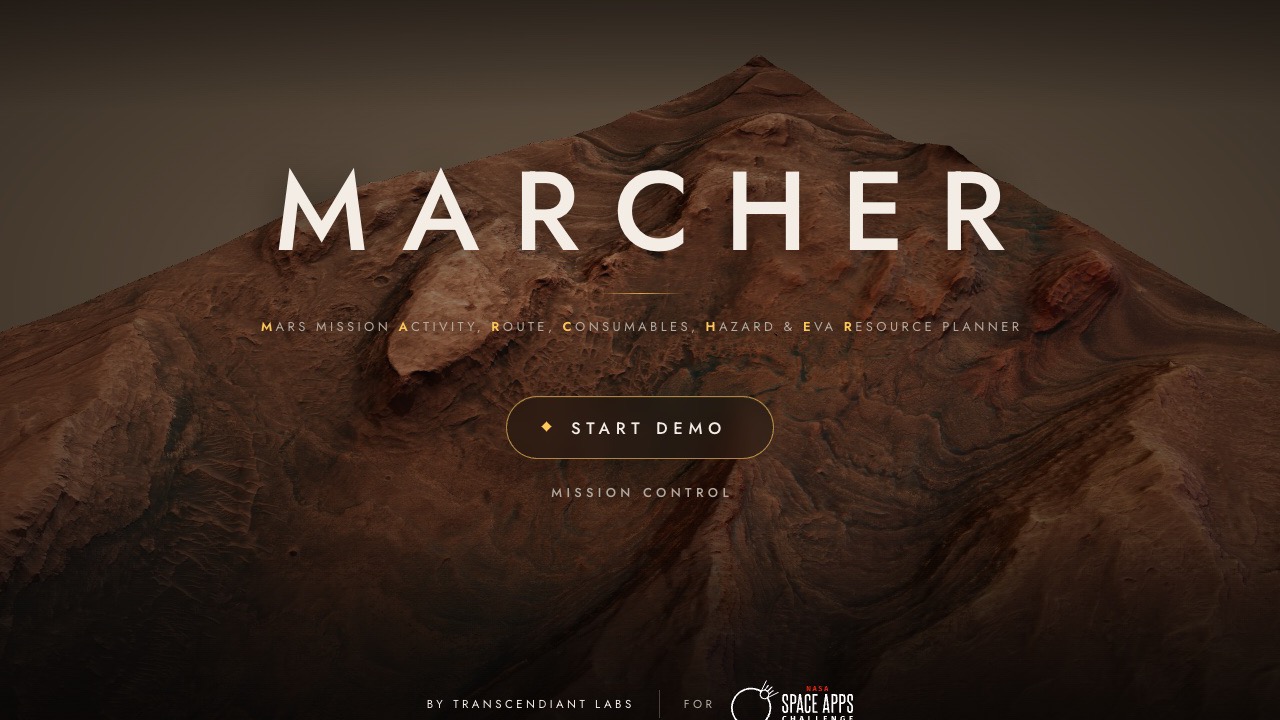
A planner for one astronaut walk on Mars, built for the NASA Space Apps Challenge 2026 (Martian Map challenge). It covers a 3.2 km square of Mount Sharp in Gale crater at 1 m terrain and 25 cm imagery, where Curiosity studied boxwork ridges. Mission Control picks six science stops where Curiosity parked, plans a least-energy route that never crosses ground steeper than 20 degrees, and gives a GO, CAUTION or NO-GO verdict from walking energy, oxygen, radiation dose, daylight, walk-back time and space weather. The planned walk is 1.42 km and 4 hours 9 minutes. You can then walk it in 3D with a suit display modeled on NASA Johnson's AR helmet design, see Curiosity's own photos at each stop, and run a solar storm drill that routes you back to the rover. Built in JavaScript and three.js from NASA HiRISE, CRISM, THEMIS, Curiosity and DONKI data. A Transcendiant Labs project.
Won the Bronze Award with my team at the Startup QC Student Competition 2026, among 91 finalist teams, and was invited by the Philippine Space Agency to present it. Founded and built a geospatial intelligence platform that tells small Philippine internet service providers exactly which neighborhoods are worth deploying to. The problem I kept running into was that all the data you'd need to make that decision exists, but it's scattered across nine different government and scientific sources that were never designed to talk to each other. So I unified them. I pulled nighttime light data from NASA VIIRS, cell tower locations from NTC and OpenCelliD, poverty estimates from PSA, and population density from a JRC/Copernicus dataset that I got directly from a climate consultant at the EU Joint Research Centre after meeting him at a university event. I wrote 21 Python scripts to clean, spatially join, and score all 42,048 Philippine barangays across nine dimensions into a single ranked dataset. The entire frontend is a single HTML file with zero frameworks and zero backend, running MapLibre GL JS on a 199MB vector tileset served through Cloudflare R2 with HTTP range requests so the browser only downloads what's visible on screen. It also has a live Starlink satellite overlay that fetches orbital data from CelesTrak and runs SGP4 propagation client-side to show real-time satellite positions over the Philippines. This live demo of a report based on the data I have compiled covers Iligan City.
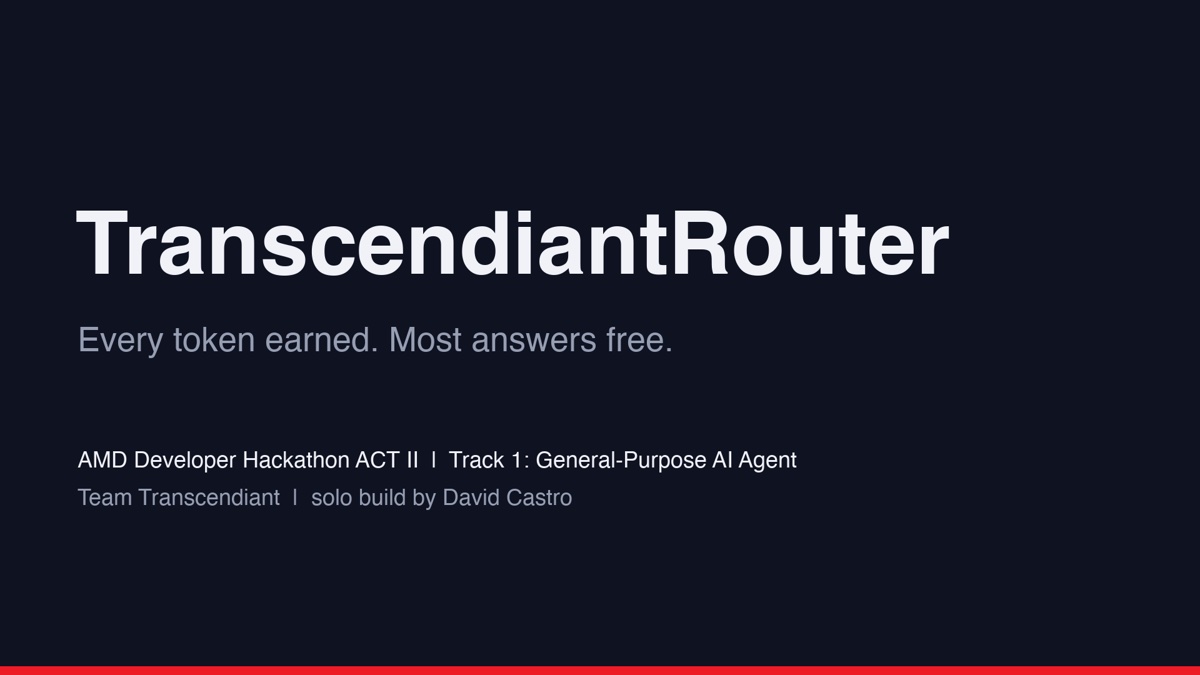
A cost-saving AI agent I built solo for the AMD Developer Hackathon: ACT II, Track 1. A small local model answers first, and the paid model runs only when the local answer cannot be proven. In 19-task rehearsals it scored 19 out of 19, using about 331 paid tokens at full speed and about 3,034 when degraded. The local model alone reached 77.0% accuracy at zero paid tokens, inside a 4 GB, 2 vCPU limit. Python and Docker.
A real-time, photoreal view of Earth from orbit that runs entirely in a web browser. It started from a problem: the ISS orbits at 7.67 kilometers per second and crosses into Earth's shadow every 45 minutes, so NASA's live external camera feed goes black for roughly half of every orbit, about 16 times a day. I wanted a view that never drops, so I built my own Earth. It uses real NASA surface scans, real orbital distances, and real physics: live SGP4 propagation of the ISS from CelesTrak two-line elements, blended into a gravity integrator for smooth orbital motion. A custom WebGL shader handles the day and night terminator, city lights on the dark side, cloud shadows, the warm scatter band at sunset, blue atmospheric limb glow, and ocean sun-glint, with a dense broadcast HUD showing live telemetry. The whole thing runs 24/7 as a YouTube livestream, rendered on a cloud GPU and pushed out continuously so it never cuts to black on the night side. I am now rebuilding the renderer natively in Rust, Bevy, and wgpu to push sharper ground detail than the NASA HDEV broadcast it replaces, with live cloud cover nowcast from NOAA GMGSI plus real aurora and lightning. EARTHSHINE is a Transcendiant Labs project.
In 2007, Tim Hutton published a paper describing Squirm3, a tiny artificial chemistry where simulated "cells" reproduced and evolved from simple rules. I rebuilt its engine for 2026. I ported the original C++/SDL program to TypeScript, moved the physics into a Web Worker decoupled from the render loop, and wrote a WebGPU renderer (with a Canvas 2D fallback) so it can run hundreds of thousands of steps over a 5000×3000 arena while staying interactive. The water is a continuum with surface tension and droplet merging, the randomness is seedable, and any state can be saved, reloaded, and replayed exactly. Running it for hours, I watched a cell tear its own membrane open, reseal around empty space, turn itself inside out, and then fill that space with nested copies of its own descendants, a colony held inside a single shell. I shared the runs with Tim Hutton, the original author, who confirmed he'd never seen bounding membranes form like that in his implementation. Built on Squirm3 (GPL-3.0); the reference is Hutton, T.J. (2007), Evolvable Self-Reproducing Cells in a Two-Dimensional Artificial Chemistry, Artificial Life 13(1).
I built a Hail Mary spaceflight simulator fangame based on real physics, all the way from Earth to Adrian. In this browser-based game, you launch the Hail Mary from the ISS's orbit and traverse roughly 12 light-years in a brachistochrone path toward Tau Ceti. I also modeled special relativity as you approach c. No Rocky yet, but the Hail Mary already has a xenonite chain ready to deploy and collect Taumoeba from Tau Ceti e's atmosphere. This game also includes centrifuge mode so you can breed the microbial solution that saves Earth, and send the beetles home. Sources: N-body RK4 gravity, JPL Horizons DE441 ephemeris.
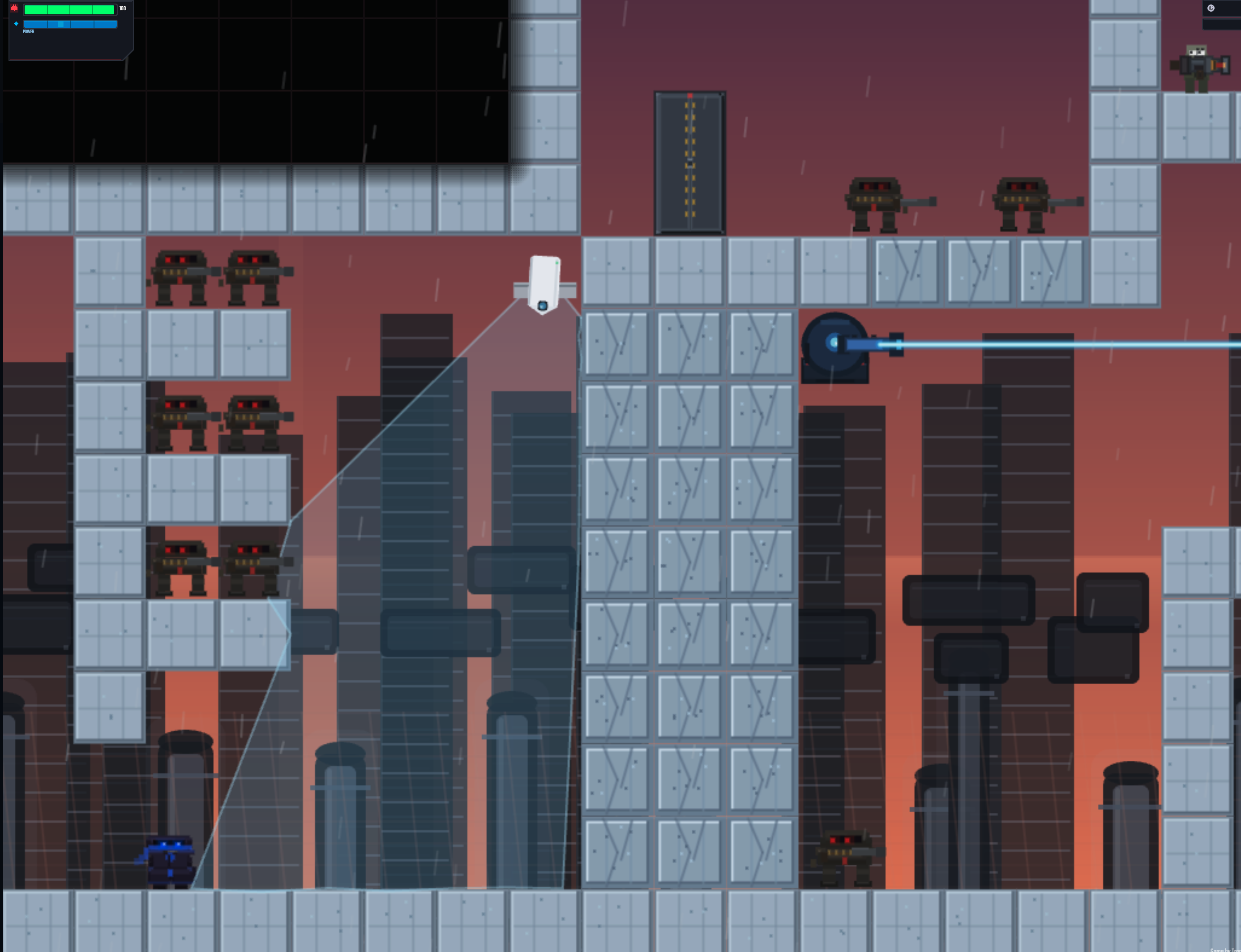
A speed and combat-focused platformer I made in two weeks as a personal game jam. The core mechanic is time-stop: you freeze time mid-fight, dash through enemies, parry hitscan bullets back at shooters, and chain kills into combos. Levels are designed to be cleared in ten seconds. It has a recording system so you can replay your runs, a level editor, and randomly generated levels. I made it in p5.js, the modern successor to ProcessingJS. I grew up coding on Khan Academy's project gallery, which ran on ProcessingJS, and that community is where I first started making games. CODE WRAITH was my way of pushing myself to see how much I could ship in two weeks with everything I've learned since then. I'm planning to go back to some of my old Khan Academy programs, rebuild them from scratch, and start releasing them on itch.io.
I led a three-person NASA Space Apps team to solve a challenge from NASA's Astrophysics Division: most exoplanets have been identified manually, and they wanted teams to create AI models that could do it automatically using NASA's open-source datasets. We built two classifiers. The first is a physics-only model trained on NASA Kepler data: it scored 84.2% accuracy and 0.917 AUC-ROC on a held-out test set, after I rejected a 93.5% version that was inflated by vetting flags. The second searches through 17,589 real NASA planet records across the Kepler, K2, and TESS missions, finds the 25 most similar cases to any new signal, and uses a cheap language model to classify it based on those examples. Every result shows exactly which reference cases the AI looked at, so researchers can verify the reasoning instead of trusting a black box. Next.js frontend with a Flask ML backend.
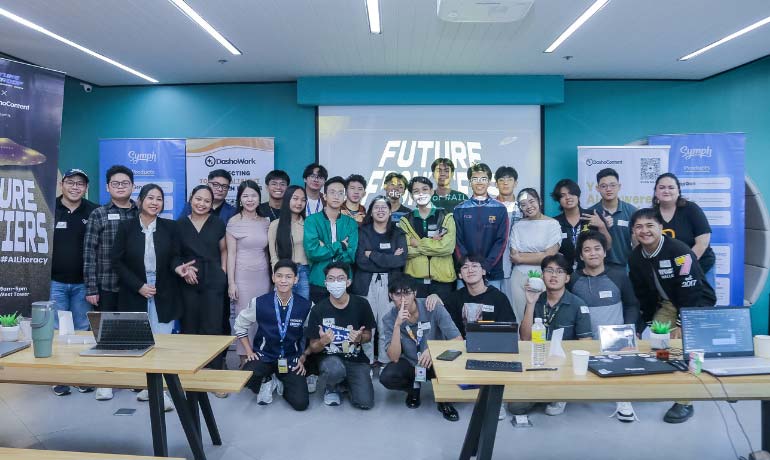
Organized and hosted a multi-university AI ideathon at KMC, The Podium West Tower in Manila. I chaired the event end-to-end, from screening 40 applications across 15 Philippine schools down to six finalist teams, to running mentoring sessions and flash talks on using AI to accelerate idea development. The judging panel included Dominic Ligot of Cirrolytix and Shad de la Cruz of Symph. Winning projects ranged from an augmented reality game that teaches AI concepts to an AI-powered agricultural drone system. The event was co-presented by Dasho (then DashoContent) and Web3PH and co-organized with Young Founders Summit, GEN AI Philippines, Third Team Media, and DashoWork.
I was already finding ways to use text-davinci-003 for SEO and brand management before ChatGPT went viral. One of my proudest results was a brand voice scanner I made from scratch. Paste a link, and it would scrape the site, crunch the content, and extract the exact semantics and tone of a brand. I also brought our Draft Generator to our internal teams, getting our workforce comfortable with AI-assisted writing before ChatGPT even went viral. I used Streamlit for fast iteration so we could move quickly, and by the time the rest of the industry caught up, our team had already been working with these tools for months.